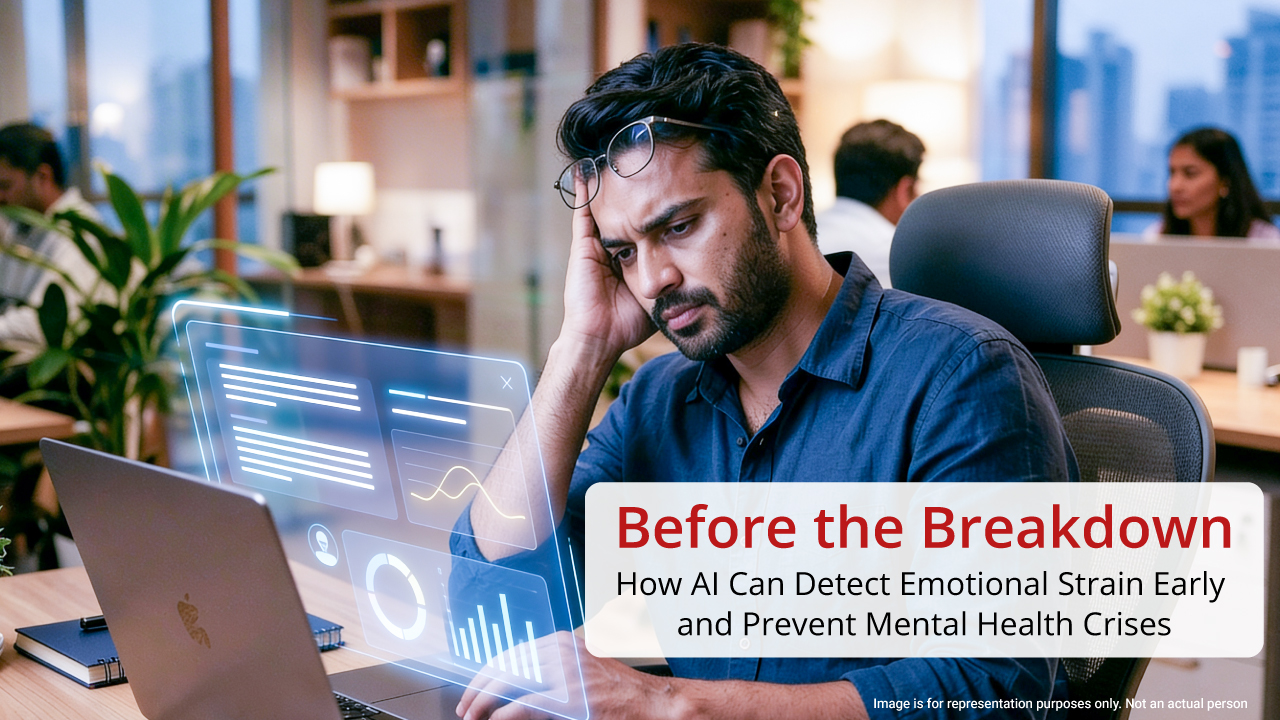
Before the Breakdown - How AI Can Detect Mental Health Risks Early
One morning, Kunal did not get up and felt broken. It was not a dramatic fall; there was no panic attack, no moment he could stop. It started small, with barely noticeable changes that, at first, did not seem significant.
His sleep duration decreased, and he experienced greater daytime fatigue. He could no longer be patient at work or with friends and family. It was more like talking with a weight, as though he was forcing each word out, and he was repeating them afterward.
Joy came late and went early, and lingered hardly, before a lingering sense of uneasiness and restlessness replaced him. He called it “a busy phase.” Weeks passed, eventually leading to months. Kunal continued to operate; he arrived at work, responded to messages, and laughed at the appropriate time. Something, however, was wearing away inside.
Why Mental Health Crises Often Go Unnoticed
The majority of mental health crises do not occur abruptly. They are patterns that become so gradual that they begin to feel natural.
The red flags tend to blend into everyday life and, therefore, become easy to ignore or to seek temporary stress relief. The emotional burden is already too great, and regaining well-being may seem impossible, or at least too difficult, by the time a person seeks assistance.
The conventional mental health systems are reactive in nature. Assistance is typically provided when symptoms have interfered with day-to-day life. However, what would happen should emotional strain be perceived before it became burnout, anxiety disorders, or depression?
During a work wellness pilot, Kunal began using a digital mental well-being platform, not because he needed it, but because it was provided to prevent it. The program was assured of privacy, ease of use, and constant support.
How AI Enables Early Detection in Mental Health
No distressing questions, no titles, and no urging to say more than he felt comfortable. Only short emotional check-ins, contemplation triggers, and indirect following patterns that aim at encouraging self-awareness.
Over time, Kunal could not see phenomena that the system detected. Heightened irritability following late working days, reduced reactions to coworkers, sleep disturbances associated with Sunday evenings, and slow retirement from activities he once enjoyed.
None of these signals was in itself dangerous. Their story happened together as a pattern which indicated emotional strain, which can lead to a serious problem when it is not solved.
The platform responded amicably rather than issuing warnings. It suggested rest patterns, introduced grounding exercises, and encouraged reflection during high-stress weeks. As the strain continued, it brought him closer to human support as a preventive measure.
Benefits of Early Intervention in Mental Health
With early-stage intervention, outcomes differ. Communication becomes more comfortable. Treatment is reduced in time and efficiency. Contrary to repair, recovery is a course correction.
Naturally, early detection should be morally sound. Emotional data is very personal. The systems should be open, willful, and aimed at empowering rather than spying.
Kunal never had a breakdown. That was the success. This preventive measure supports the idea that early support works best when science, ethics, and empathy are aligned.
Early identification in mental health is not clinical prediction. It involves pattern recognition for understanding, compassion, and early intervention.
ImatterAI’s Role in Preventing Mental Health Crises
ImatterAI is constructed fundamentally based on prevention.
Using psychometric intelligence, behavioral indicators, and adaptive AI, ImatterAI enables the early detection of emotional strain before it becomes a crisis.
Its systems are intended to identify patterns, not to categorise individuals, but to guide users toward balance, resilience, and timely human assistance.
ImatterAI has a transparency-first design, consent-led data use, and culturally sensitive user interfaces that support early detection rather than being intrusive.
Everyday Moments When Early Detection Helps
Emotional strain often appears in subtle ways:
- Noticing persistent fatigue even after a full night’s sleep
- Feeling unusually irritable during routine conversations
- Losing interest in activities that once felt enjoyable
- Struggling to focus on simple tasks at work or school
- Withdrawing from social interactions without clearly understanding why
These quiet shifts are often early signals of emotional strain.
When supportive systems recognize patterns and encourage timely care, people can respond before stress becomes overwhelming.