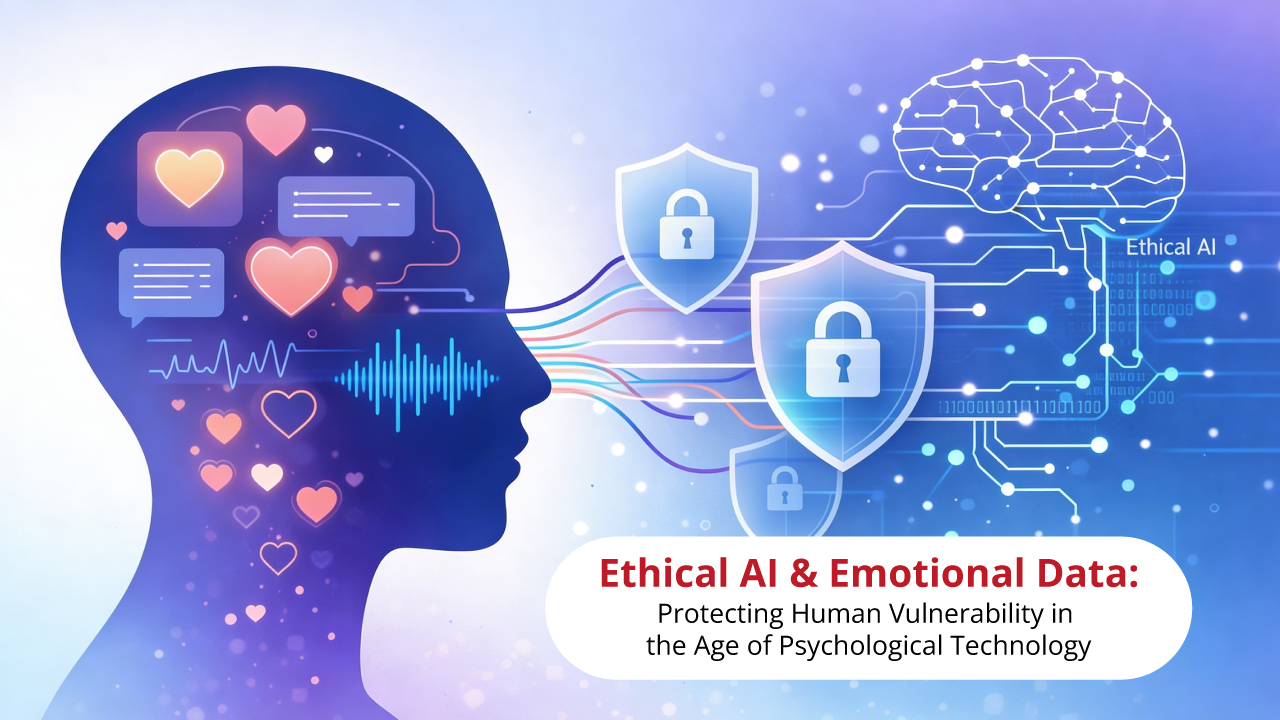
Ethical AI & Emotional Data: Protecting Human Vulnerability in the Age of Psychological Technology
One day, late in the evening, she was sitting on her couch, looking at her phone. The day had been emotionally dull. She was not at ease, and a hard conversation at work, an increasing sense of exhaustion, and an unspoken pressure to appear calm had left her feeling discomfited. She then held back and then opened a mental wellbeing platform that she had recently seen herself using.
The application presented her with a simple question: How are you feeling today?
For a moment, she paused. The query was brief, but the response had a very personal touch. She wrote a few words regarding being nervous and upset. In a couple of seconds, the platform offered her a relaxing workout and mindful practices that made her stop and relax.
In Neha's case, the interaction was supportive and comforting. However, what is happening behind this basic scene is a far broader discussion within the realm of technology: how emotional information is gathered, analyzed, and protected in an era when computer technology is becoming intertwined with mental health.
Understanding the User Experience in Mental Health Apps
Emotional data does not resemble other digital information much. When individuals express how they feel, whether through journaling, a therapy platform, or a wellbeing app, they expose the inner workings of their world, which are usually delicate and personal. These meditations can contain feelings of weakness, doubt, dread, or optimism.
Due to the increased sophistication of psychological technology, systems are also beginning to read trends in human feelings from digital behavior. There are also early signs of stress, burnout, or emotional exhaustion that can sometimes be detected in sleep, communication, and interaction patterns. Artificial intelligence can process such patterns and propose helpful interventions that prompt people to stop, think, or consult.
How AI Detects & Responds to Emotional States
When used effectively, these systems can increase access to mental health resources and help people gain greater awareness of their emotional state. However, this possibility also entails certain ethical responsibilities.
However, emotionally colored information, unlike common consumer data, carries the burden of human vulnerability. It is not only a reflection of what people do, but also of how they feel, what they are struggling with, and, at times, what they are afraid of; they often do not talk about it. The security of such information requires strong design, clear policies, and high ethical responsibility.
Informed consent is one of the most significant principles of ethical psychological technology. The individual must know the nature of the information gathered, how it will be utilized, and who will access it. These details should be conveyed by the mental health platform in an easy-to-understand language, so users feel in control and not confused about their involvement.
Data Sovereignty & Individual Rights
The other important principle is data sovereignty, which is the notion that people must have the right to control their emotional data. Individuals should be allowed to view, control, and remove their information at will. Feeling outbursts in times of weakness should never form part of their history, which one will never be able to manipulate.
Security is also a crucial element. Given the sensitive nature of emotional data, which can reveal a person's private matters, the strongest mechanisms should be established to prevent unauthorized access or misuse. Responsible platforms need to take emotional information as seriously as healthcare institutions take medical records.
In addition to privacy, another aspect of ethical design is how artificial intelligence interprets emotional cues. Human emotions are complicated and culturally, contextually, and personally inclined. Any algorithm attempting to study emotional patterns should thus be developed cautiously to avoid simplistic assumptions about human experience.
Balancing AI Support with Human Empathy
Technology can offer hints and ideas, but it must never think it can know the true depth of human emotion. The ethical psychological systems should be modest in their construction, acknowledging that AI can complement wellbeing but cannot substitute for the subtlety of human empathy.
The other significant ethical issue is the reliance on technology. The wellbeing platforms should ensure they encourage users to focus on building personal consciousness and resilience rather than relying on constant digital instructions. Empowerment should always be the aim: to make people more self-aware and less reliant on algorithms for self-validation and emotional support.
The future of mental health technology will not rely solely on innovation; it will also depend on trust. Citizens will never feel safe posting their emotional thoughts because they think these sites really don't care about their dignity, privacy, and wellbeing.
ImatterAI & Responsible Psychological Technology
ImatterAI understands that the mental wellbeing systems must be constructed with technological awareness and ethical sensitivity. The platform focuses on responsible data practices and human-centered design within its framework of therapy, training, experiences, and technology.
Instead of treating emotional data as a commercial asset, ImatterAI views it as a personal reflection that should be approached with caution and respect. The technology developed on the platform is intended to help people identify emotional tendencies and ensure users have clear control over their own information.
Simultaneously, ImatterAI incorporates professional psychological experience into its technologies, which is why it further supports a human orientation rather than eliminating it. This moderation facilitates the establishment of settings in which people can express their feelings without fear, because their vulnerability is addressed with respect.
The future of mental health technology will not be merely about highly sophisticated algorithms or smart systems, as the digital world continues to change. It will be characterized by values that lead them. Ultimately, the technologies of emotion analysis that will matter most will not merely analyze emotions but will preserve the trust and humanity that emotions symbolize.
Everyday Moments When Ethical Mental Health Technology Matters
Trust in mental health technology often becomes important during deeply personal moments when individuals choose to share their emotions:
- Typing an honest reflection about a difficult day into a wellbeing app.
- Recording thoughts about anxiety or self-doubt in a digital journal.
- Seeking calming guidance during a stressful or emotional moment.
- Sharing feelings that are difficult to express to others.
- Exploring emotional patterns through mood tracking or self-reflection tools.
These moments involve personal vulnerability and trust. When mental health platforms are designed with transparency, privacy protection, and clear consent, individuals feel safe expressing their emotions without fear of misuse. Ethical design ensures that technology supports wellbeing while protecting the dignity and humanity behind every emotional experience.