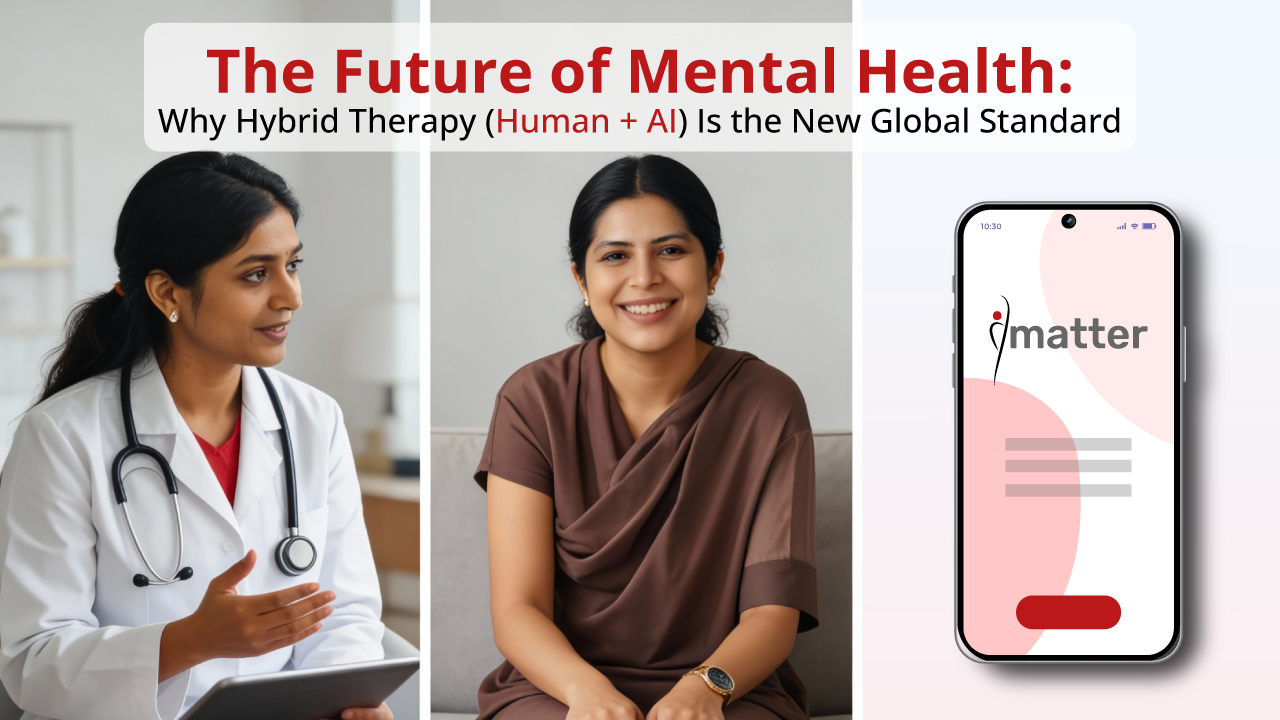
The Future of Mental Health: Why Hybrid Therapy (Human + AI) Is the New Global Standard
Mental health support once meant sitting with a therapist and talking through difficult emotions. For many, this was life-changing. But as life became faster and more complex, people needed more than weekly sessions - they needed support in between.
Today, mental health needs are more diverse than ever. Younger individuals often prefer digital interaction, while others struggle with access, time, or availability of care.
This is where hybrid therapy emerged - not to replace human care, but to extend it.
What Is Hybrid Mental Health & Therapy?
Hybrid therapy combines human expertise with AI-driven support, creating a system that meets people wherever they are.
Whether it's late at night, between sessions, or during stressful moments, users can access guidance instantly while still benefiting from therapist-led care.
AI provides real-time support - mood tracking, reminders, and coping exercises - while therapists offer depth, empathy, and personalized insight.
Together, they form a system that is more responsive, continuous, and effective than traditional therapy alone.
Benefits of Hybrid Mental Health Models
Hybrid therapy solves both emotional and practical challenges in mental health care.
It provides continuous emotional support while addressing barriers like long wait times, limited access, cost, and stigma.
Digital tools create safe, private spaces where individuals can reflect, track emotions, and stay engaged in their healing journey.
At the same time, therapists use these insights to provide more personalized and effective care during sessions.
Why Hybrid Therapy Improves Outcomes
Traditional therapy often leaves gaps between sessions. Hybrid models fill those gaps.
When emotional challenges arise, individuals can access immediate support instead of waiting days or weeks.
This continuous engagement strengthens emotional awareness, improves consistency, and accelerates progress.
AI also helps identify patterns over time, giving therapists deeper insight into a person's emotional journey.
The Role of ImatterAI
ImatterAI is built on this hybrid model, connecting therapy sessions with daily emotional support.
Users can check in anytime - during stress, uncertainty, or reflection - and receive personalized guidance.
Through tools like journaling prompts, mindfulness exercises, and mood tracking, ImatterAI supports continuous growth.
It works alongside therapists, enhancing care rather than replacing it, and ensuring support is always available.
Everyday Moments When Hybrid Support Helps
Emotional challenges don't follow schedules - they appear in everyday moments:
- Feeling anxious late at night
- Facing stress before an important event
- Processing emotions after a difficult conversation
- Noticing recurring emotional patterns
- Wanting to reflect while emotions are still fresh
These moments highlight the need for continuous care.
When human empathy is supported by intelligent technology, mental health becomes an ongoing journey - not just a weekly session.