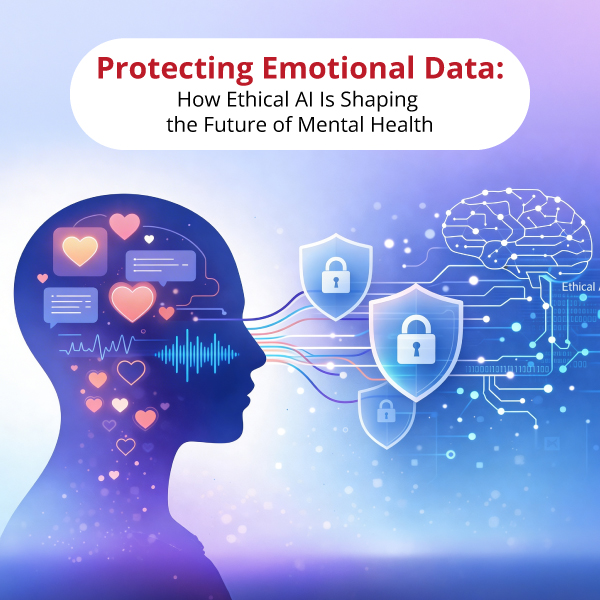
Protecting Emotional Data: How Ethical AI Is Shaping the Future of Mental Health
Artificial intelligence is becoming a bigger part of our emotional lives. Many mental health platforms now offer personalized support by asking users about their feelings and giving suggestions based on their mood. This makes it easier for people to access mental health resources and get the help they need. As these AI tools improve, they offer not just convenience but also a better understanding of our psychological needs.
Collecting emotional data is very different from gathering other types of digital information. When people share their feelings on mental health apps, such as stress, hope, anxiety, or uncertainty, they reveal very personal parts of themselves. This data is sensitive and shows our human vulnerability. If it is not handled carefully, it can cause people to lose trust or even be harmed. Protecting emotional data is not just a technical issue; it is also a moral responsibility, and platforms must treat it with great care.
Ethical AI development in mental health technology demands that transparency, consent, and security are central. Users must be fully informed about how their data is collected, stored, and used, and must be protected by robust safeguards against unauthorized access or misuse. Platforms should empower individuals to view, control, and delete their sensitive information at will. By prioritizing user rights and maintaining rigorous privacy standards, mental health technologies can foster trust, encourage honest self-reflection, and support genuine wellbeing.
At ImatterAI, we focus on responsible data practices, user-centered technology, and clear policies. By combining psychological knowledge with advanced AI, we help users explore their emotions safely while retaining control over their sensitive data. Our focus on privacy, empowerment, and ethical progress sets a new standard for emotionally intelligent technology, ensuring that our digital support systems protect people rather than exploit their vulnerability.